
What Goes Into a Properly Installed Air Conditioner in Lincoln, CA
A cooling system that works well in Lincoln has to stand up to long summers where daytime temperatures often sit above 95 degrees for weeks at a time. When we install an air conditioner, we treat the equipment as one part of a larger system. The unit itself matters, but so does the refrigerant charge, the airflow through the ducts, the electrical connections, and the way the condenser sits outside the home. Skip any one of those factors and the system will run harder, cost more to operate, and fail sooner than it should.
Quality Sheet Metal & HVAC LLC approaches every installation in Lincoln the same way: measure first, then match the equipment to the house. We are a locally owned and operated company, and we know that a system installed correctly the first time saves the homeowner money and frustration for the entire life of the equipment. That commitment to getting the details right is a direct result of how we operate — with integrity, and with the needs of the customer placed ahead of a quick sale.
The Steps We Follow During an Installation
Every home is different, so we do not use a fixed template. We do, however, follow a consistent set of steps that make sure nothing is missed. This structure keeps the work predictable and gives the homeowner a clear idea of what to expect from start to finish.
- Load calculation: We measure the square footage, check insulation levels, count windows, and note their orientation to the sun. This tells us the cooling load in BTUs so the unit is neither too small nor oversized.
- Ductwork inspection: Before any equipment goes in, we examine the existing ducts for leaks, crushed sections, and poor connections that would waste the cooling the new unit produces.
- Equipment selection: We match the condenser, coil, and air handler as a matched set so the components are rated to work together at their published efficiency.
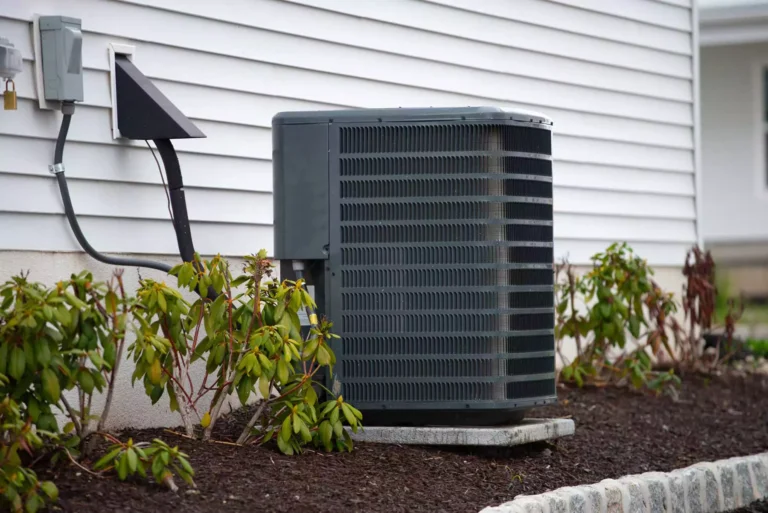
- Placement of the condenser: The outdoor unit needs clearance for airflow, a level pad, and a location that keeps noise away from bedrooms and neighbors.
- Refrigerant charge and testing: After the lines are connected, we charge the system to the manufacturer’s specification and verify pressures and temperatures before we finish.
- Final commissioning: We run the system through a full cooling cycle, check airflow at the registers, and confirm the thermostat controls the equipment correctly.
Sizing: The Decision That Affects Everything Else
An air conditioner that is too large for a home does not cool it better. It cools it worse. An oversized unit reaches the thermostat setpoint quickly, then shuts off before it has had time to pull moisture out of the air. The result is a house that feels cold and clammy, with the compressor cycling on and off repeatedly. That short cycling wears out the compressor faster and drives up the electric bill. In a Lincoln summer, where the unit runs for hours at a stretch, an oversized system is a lasting mistake.
A unit that is too small has the opposite problem. It runs constantly and still cannot keep up during the hottest part of the afternoon. We avoid both outcomes by running a proper load calculation for each installation. The number we arrive at reflects the actual heat gain of the home, not a rough guess based on floor area alone. This is why we spend time inside and outside the house before we recommend a specific tonnage.
Why Ductwork Deserves Attention Before New Equipment
Duct systems are the part of a cooling system that homeowners never see, which is exactly why they are so often ignored. Leaky ducts can waste twenty to thirty percent of the cooling a system produces, sending conditioned air into attics and wall cavities instead of living spaces. Installing a new, efficient air conditioner onto a leaking duct system is like putting a new engine in a car with flat tires — the potential is there, but the results never arrive.
Our background in sheet metal fabrication changes how we handle this problem. Rather than force new equipment onto whatever ductwork happens to exist, we fabricate transitions, plenums, and duct sections to fit the specific home. Custom metalwork means tighter connections, better airflow, and fewer sharp turns that restrict the air moving through the system. This is a capability many installers do not have in-house, and it is one of the reasons our finished installations perform closer to the manufacturer’s rated efficiency.
Situations Where a New Installation Is the Right Call
Not every cooling problem calls for a full replacement, but there are clear cases where a new installation is the sensible choice. Recognizing these situations early helps homeowners avoid throwing money at repairs that only delay the inevitable.
The first is age. Air conditioners that are fifteen years or older have usually lost a large share of their efficiency, and they often use refrigerants that are being phased out and are expensive to replace. When repair costs start to approach the value of the equipment, replacement becomes the better investment. The second is repeated breakdowns. A system that needs service every summer is telling you something, and continuing to patch it rarely pays off.
The third situation is a home addition or remodel. When you add square footage, the original air conditioner may no longer have the capacity to cool the larger space. A new, correctly sized system solves the problem cleanly. The fourth is a change in comfort expectations — homeowners who want variable-speed equipment, better humidity control, or quieter operation often find that a modern system delivers what an older unit simply cannot.
Equipment Options and Efficiency Ratings
Modern air conditioners are rated by SEER2, a measure of seasonal cooling efficiency. Higher SEER2 numbers mean lower operating costs, though the equipment itself costs more upfront. For a climate like Lincoln’s, where the cooling season is long, a higher-efficiency unit often pays back the difference through lower summer electric bills. We walk each homeowner through these trade-offs so the choice fits both the house and the budget.
Beyond the efficiency rating, there are choices in compressor type. Single-stage compressors run at full power whenever they are on. Two-stage and variable-speed compressors can run at lower output during milder conditions, which improves comfort and reduces energy use. Variable-speed systems also do a better job of removing humidity, which matters on the muggier days that arrive with afternoon storms. We help homeowners weigh these features against cost rather than pushing the most expensive option.
Serving Lincoln and the Surrounding Communities
While this page focuses on Lincoln, our installation work reaches homeowners throughout the region, including Loomis, Auburn, Granite Bay, Roseville, Rocklin, Antelope, Citrus Heights, Newcastle, North Highlands, Sheridan, and Wheatland CA. As a local company, we understand the specific demands the Placer County climate places on cooling equipment, and we build every installation to meet those demands rather than a generic standard.
Our team is hard-working, honest, and dedicated to providing the best service possible. When you call Quality Sheet Metal & HVAC LLC about an AC installation, you are working with people who live and work in the same conditions you do. We do the sizing carefully, we handle the ductwork properly, and we test the finished system before we leave. That thoroughness is how we make sure a new air conditioner keeps your home comfortable through many summers to come. If you are considering a new cooling system for your Lincoln home, reach out to us and we will start with an honest assessment of what your house actually needs.