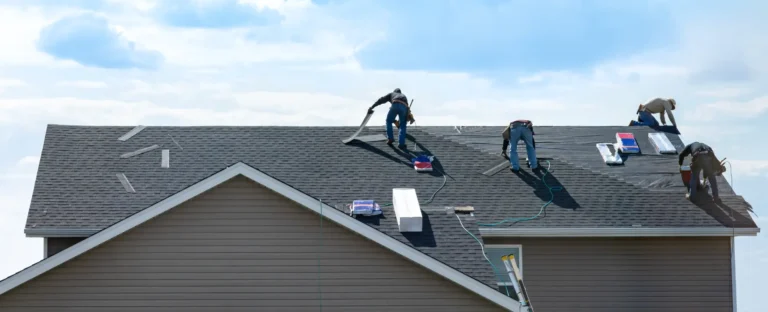

A standing-seam metal roof can last fifty years or more when it is installed correctly, yet that lifespan depends almost entirely on the details most homeowners never see: the panel seams, the fastener spacing, the flashing transitions, and the underlayment beneath. These are the elements that decide whether a roof sheds a winter storm or lets water find its way into the structure below. At Quality Sheet Metal & HVAC LLC, roofing installation in Rocklin, CA is built on the same precision metalwork that defines our heating and air conditioning craft, and that background shapes every seam we fold and every panel we set.
Why Metal Fabrication Expertise Changes the Result
Most roofing contractors come from a roofing-only trade. Our roots are in sheet metal, which means we understand how metal behaves before it ever reaches a roof deck. Metal expands and contracts with temperature. It wants to move. A roof installed without accounting for that movement will buckle, oil-can, or loosen its fasteners within a few seasons. Because we fabricate and work metal every day, we design the installation to allow for thermal expansion rather than fight against it.
This matters especially in Rocklin, where summer attic temperatures can soar while winter nights drop sharply. The daily and seasonal swings put real stress on roofing materials. A roof that ignores expansion creates gaps, popped seams, and leaks that appear long after the crew has left. Our fabrication knowledge lets us anticipate that movement, specify the right clip systems, and hem edges so the metal can breathe without compromising the weather seal.
The Installation Process From Deck to Ridge
A roofing installation is a sequence, and skipping or rushing any single stage undermines everything built on top of it. When we take on a project, we follow a deliberate order that protects the structure and the finished surface. We begin with the deck, inspecting the sheathing for soft spots, rot, or old fasteners that need replacing. A roof is only as sound as the surface it rests on.
From there, the layered build-up begins. Each layer has a job, and each one depends on the one beneath it being correct. The process we follow generally moves through these stages:
- Deck inspection and repair: We check the sheathing, replace damaged sections, and confirm the surface is clean, dry, and properly fastened before anything else goes down.
- Underlayment and moisture barrier: A synthetic or self-adhering membrane goes down to protect against condensation and any water that slips past the outer layer.
- Flashing and transitions: Valleys, sidewalls, chimneys, and penetrations get custom-formed flashing – the part of a roof where most leaks actually begin.
- Panel or shingle installation: The visible roofing goes on with correct overlap, fastener placement, and alignment, set to allow for expansion where metal is used.
- Ridge, hip, and edge detailing: Finishing pieces lock the system together, ventilate the attic where needed, and give the roof its clean final line.
- Final inspection and cleanup: We walk the finished roof, confirm every seam and fastener, and clear the site of debris and stray fasteners.
Each of these stages is verified before we move to the next. That discipline is the difference between a roof that looks finished and a roof that performs for decades.
Flashing: The Detail That Decides Everything
If we had to point to the single element that separates a lasting roof from a failing one, it would be the flashing. Flashing is the metalwork that manages water at every place the roof surface is interrupted – around chimneys, skylights, plumbing vents, dormers, and in the valleys where two roof planes meet. Water does not usually enter through the middle of a roof panel. It enters at these transitions, where a small gap or a poorly formed piece of metal gives it a path inside.
This is exactly where our sheet metal background earns its keep. We form flashing to fit the specific angles and conditions of each roof rather than relying only on generic, pre-made pieces that approximate the job. A valley flashing shaped to the true pitch, a chimney saddle bent to the actual dimensions, and counter-flashing tucked properly into a masonry joint all come from the same skills we use in our HVAC ductwork and metal fabrication. A tight, correctly formed flashing system is the quiet reason a roof stays dry year after year.
Applications We Handle Across Rocklin
Roofing needs vary widely, and no two projects arrive with the same conditions. A homeowner replacing an aging composition roof has different priorities than a property owner adding a metal roof for longevity and energy performance. We adapt our approach to the structure in front of us.
One common scenario is the full tear-off and replacement. Older roofs eventually reach the end of their service life, and layering new material over worn-out roofing only hides the problem. In these cases we strip the roof to the deck, address any damage we find, and rebuild the system properly from the sheathing up. Another frequent situation involves integrating roofing with ventilation and metal detailing – ridge vents, exhaust flashing, and chimney work – where our combined roofing and sheet metal capability lets a single team handle details that often require two separate trades.
We also work on roofs that have developed leaks at specific points. Rather than recommending an unnecessary full replacement, we trace the water to its source, which is frequently a failed flashing or a worn penetration seal, and correct the actual problem. This consultative approach reflects how we operate across every service. Quality Sheet Metal & HVAC LLC operates with integrity, and we always put the needs of our customers first.
Why Local Ownership Matters for Your Roof
A roof is a long-term investment, and the company that installs it should be one you can reach for years afterward. As a locally owned and operated company serving Rocklin and the surrounding communities throughout Loomis, Auburn, Granite Bay, Roseville, Rocklin, Antelope, Citrus Heights, Newcastle, North Highlands, Sheridan, and Wheatland CA, we are accountable to the neighbors we work for. We are not a distant franchise passing through. Our reputation is built on the roofs standing in the communities where we live and work.
That local presence also means we understand the specific demands of this region – the heat, the sun exposure, the occasional heavy winter rain, and the way these conditions wear on different roofing materials over time. We know how important efficient, high-quality service is, and our team is hard-working, honest, and dedicated to providing the best service possible. When you choose us for a roofing installation, you are choosing a crew that treats precision as the standard rather than the exception.
Let Us Evaluate Your Roofing Project
Every good roofing installation starts with an honest assessment of what the structure actually needs. Before any work begins, we look at the condition of the existing roof, the deck beneath it, the flashing points, and the ventilation, then we explain what we find in plain terms. You should understand exactly what your roof requires and why, without pressure toward work that does not serve you.
Whether you are planning a complete replacement, considering a durable metal roof, or dealing with a stubborn leak that other contractors have failed to solve, the team at Quality Sheet Metal & HVAC LLC brings fabrication-grade precision to roofing installation in Rocklin, CA. Reach out to us to schedule an evaluation, and let us put our metalworking craft to work protecting your home.